


kategória
szerző
cím
sorozat
betöltés...
kiadó
betöltés...
ISBN
évszám
ár
-
leírás
Előrendelhető
A mezők bármelyike illeszkedjen
A mezők mind illeszkedjen




Foreword
Of all the higher forms of life the birds are the most beautiful, most musical, most admired, most watched and most defended. Indeed, there is scarcely a square mile of the earth's surface that some birds do not occupy, or travel across, except the interior of the Antarctic continent. Without them much of our world would seem ominously lifeless and silent.
Birds have always touched the lives of men in many ways, but they have long been taken for granted and the present plight of many species has brought them into sharper focus....
online ár:
Webáruházunkban a termékek mellett feltüntetett fekete színű online ár csak internetes megrendelés esetén érvényes.
4980 Ft

Részletesen erről a termékről
Bővebb ismertető
Foreword
Of all the higher forms of life the birds are the most beautiful, most musical, most admired, most watched and most defended. Indeed, there is scarcely a square mile of the earth's surface that some birds do not occupy, or travel across, except the interior of the Antarctic continent. Without them much of our world would seem ominously lifeless and silent.
Birds have always touched the lives of men in many ways, but they have long been taken for granted and the present plight of many species has brought them into sharper focus. Birds are far more than finches, doves and thrushes to enliven the garden, ducks and quail to fill the sportsman's bag, or rare waders to be ticked off on the bird-watcher's list. They are an ''ecological litmus paper". They reflect changes in the environment quickly; they warn us of things out of balance, sending out signals whenever there is a deterioration in the ecosystem. It is inevitable that the intelligent person who watches birds must become a committed environmentalist. He is disturbed when a species becomes endangered and deplores the passing of a species because it means the abrupt termination of a long line of evolution.
This book offers the reader a fresh look at what birds are, what makes them tick, and what lies behind their extraordinary success in coming to terms with virtually every habitat available on our planet - from the polar
regions to the equatorial rain-forests and from the mountain-tops to the sky and the open sea. Visiting the natural habitats of many of the world's most fascinating birds requires more time and wherewithal than most of us can command. Not everyone can travel to New Zealand to see a Kiwi or to Australia to observe an Emu. We may aspire to know at least our own native species, and, through the displays of captive birds in zoos and wildlife parks, a few species from other lands.
Recent years have seen the emergence of a new type of opportunity - guided tours to the uttermost ends of the earth for the primary purpose of observing the native bird-life. Antarctica, the northernmost reaches of Greenland, the headwaters of the Amazon and the highlands of Ethiopia - all are available. More than 25 years ago there were bird tours by ship around the islands of Scotland and Audubon-sponsored tours through Florida, but in recent years the coverage has extended to the whole world.
In lieu of such travel, the armchair voyager can be knowledgeable about every bird family, every zoo-geographical realm and every major habitat, through the pages of this lavishly illustrated book. The living bird is the key, rather than geography or taxonomy. Birds are the very aflTirmation of life and beauty. I commend this book - this avian gallery - to you for your pleasure.
U
crcj^-
1
Termékadatok
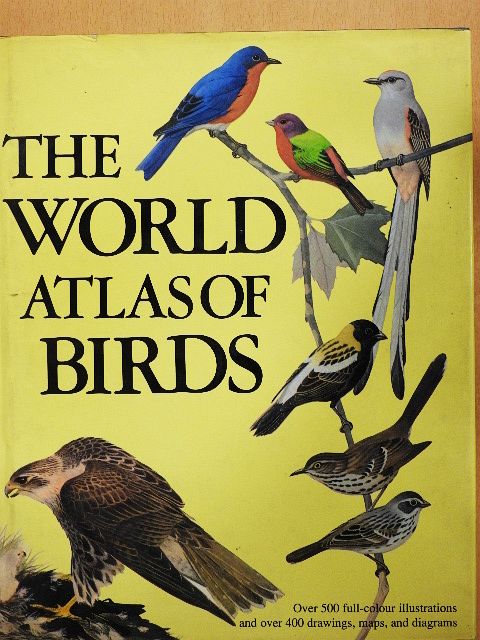
Cím: The World Atlas of Birds [antikvár]
Kötés: Fűzött keménykötés
ISBN: 088665582X
Méret: 240 mm x 300 mm
Új vásárló vagyok!
új vásárlóval indíthatsz rendelést............