


kategória
szerző
cím
sorozat
betöltés...
kiadó
betöltés...
ISBN
évszám
ár
-
leírás
Előrendelhető
A mezők bármelyike illeszkedjen
A mezők mind illeszkedjen



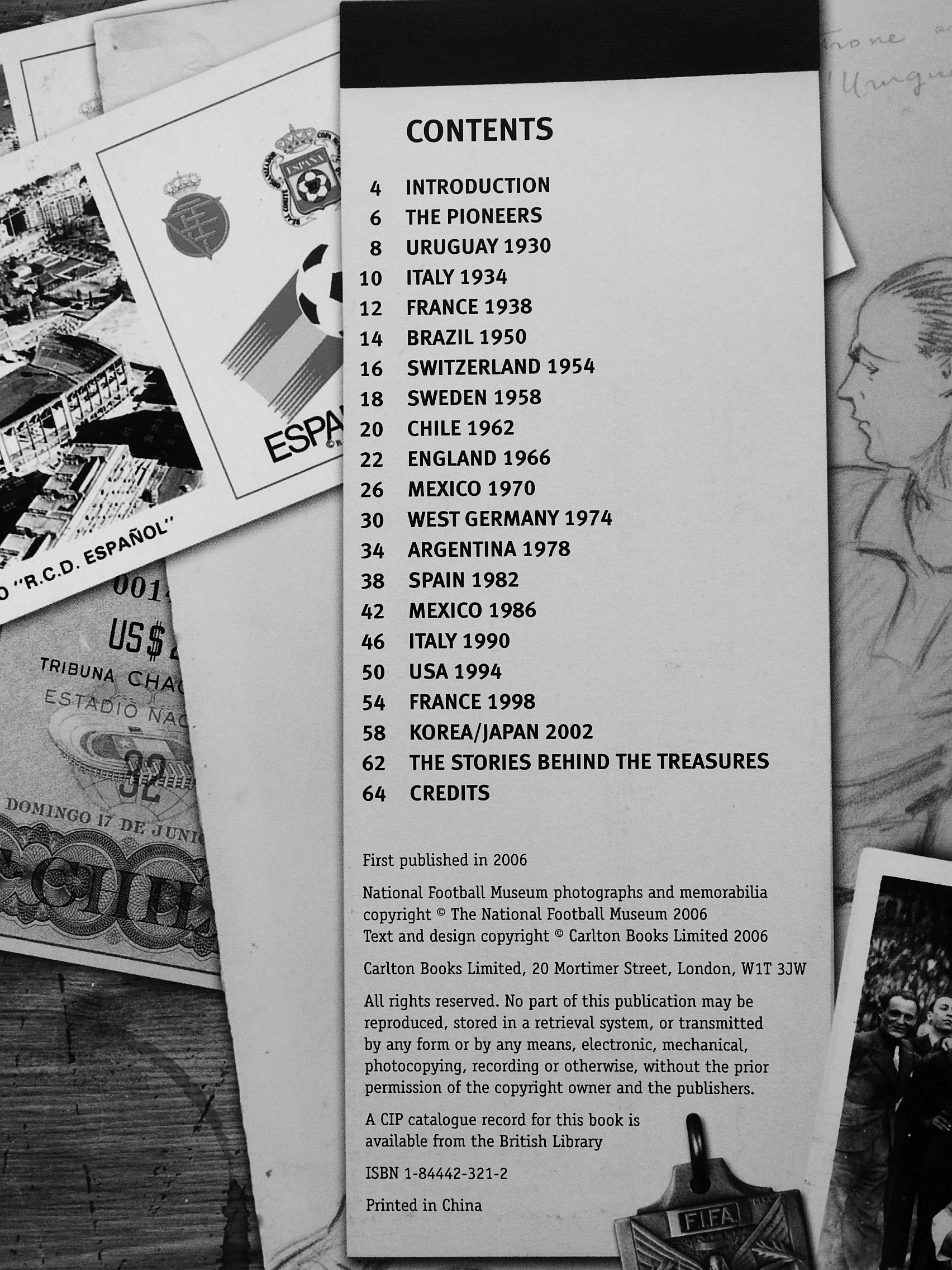
The Treasures of the World Cup [antikvár]
Keir Radnedge, Mark Bushell

©
r
FOREWORD
The World Cup is incomparable. No other event unites billions around the globe quite like association football's four-yearly fiesta. For the host nation it is a month at the centre of international attention, for the competing nations a month-long party and for fans around the world a unifying spectacular - whether "their" team are competing or not. For the players and coaches it is an all-too-brief voyage to the pinnacle of the international game. I was fortunate enough to play in two World Cups. My first was in 1986...
online ár:
Webáruházunkban a termékek mellett feltüntetett fekete színű online ár csak internetes megrendelés esetén érvényes.
12000 Ft

Részletesen erről a termékről
Bővebb ismertető
©
r
FOREWORD
The World Cup is incomparable. No other event unites billions around the globe quite like association football's four-yearly fiesta. For the host nation it is a month at the centre of international attention, for the competing nations a month-long party and for fans around the world a unifying spectacular - whether "their" team are competing or not. For the players and coaches it is an all-too-brief voyage to the pinnacle of the international game. I was fortunate enough to play in two World Cups. My first was in 1986 in Mexico when England reached the quarter-finals and I was the entire tournament's six-goal leading scorer; my second, of course, was in 1990 in Italy when we went one step further before only the lottery of penalty kicks and West Germany stopped us short of a place in the Final itself.
A handful of players have made it to four or even five World Cups; some great players never made it all. George Best's greatest years never coincided with Northern Ireland's qualifying eras; Real Madrid's great Alfredo Di Stefano went to the finals in Chile in 1962 with Spain and sat it all out because of injury. Such accidents of fate are part and parcel of the dramatic history of the World Cup as retold in this book with its unique weave of historical narrative and illustrative support from the National Football Museum in Preston.
Did the players in the first final in 1930 in Uruguay receive a medal? Did England really turn down a late invitation to play in the finals in 1938? What was the truth behind the theft and recovery and theft again of the Jules Rimet Trophy? Was Ronaldo really left out of Brazil's initial line-up for the 1998 final in France?
Television caught up with the World Cup only in the late 1950s. Thus the exploits of the superstars of the modem era - from Pele on through Eusebio, Bobby Charlton, Bobby Moore and Geoff Hurst, Franz Beckenbauer, Johan Cruyff, Diego Maradona, Zinedine Zidane and Ronaldo - are repetitively familiar to us all. But the World Cup was founded on the initial exploits of earlier stars such as Hector Scarone, Luisito Monti, Giuseppe Meazza, Juan Schiaffino and Fritz Walter whose names may ring fewer bells but who are deserving of equal status in any World Cup hall of fame.
The finals in Germany will be the 18th. Yet only an exclusive band of seven nations have ever emerged victorious - Uruguay, Italy. Germany, Brazil, England. Argentina and France. Those countries and eight others - Switzerland. Sweden. Chile. Mexico, Spain and the United States plus Japan and South Korea last time around in 2002 - have basked in the honour ofjjlaying host to the world. This is thestory of all those players and countries - not forgetting the amateur officials whose passion dreamed up the World Cup. No doubt they would be astonished to see how their extraordinary vision has not only captivated us all down the years but continues to do so.
)ststampl3
•a de speciella i loonent
jyen »r de e^
de 32 otticielU
•-t ovansli«
IN AN INTERNATIONAL CAREER SPANNING NINE YEARS FROM 1984 TO 1992, GARY UNEKER WON 80 CAPS AND SCORED 48 GOALS, ONE FEWER THAN BOBBY CHARLTON'S ENGLAND RECORD. THE SUPREME GOAL POACHER, HE PUYED IN WO WORLD CUP FINALS, WINNING THE GOLDEN BOOT FOR HIS SIX GOALS AT MEXICO 1986 AND REACHING THE SEMI-FINALS AT riAUf 1990.
Termékadatok
Cím: The Treasures of the World Cup [antikvár]
Kiadó: Carlton Books Limited
Kötés: Varrott keménykötés
ISBN: 1844423212
Méret: 310 mm x 270 mm
Új vásárló vagyok!
új vásárlóval indíthatsz rendelést............