


kategória
szerző
cím
sorozat
betöltés...
kiadó
betöltés...
ISBN
évszám
ár
-
leírás
Előrendelhető
A mezők bármelyike illeszkedjen
A mezők mind illeszkedjen




Preface
Fast and cheap transportation has been one of the main products of the Industrial Revolution. Distances have been shortened at an astonishing pace. Day by day the world seems smaller and smaller and societies that for millennia practically ignored each other are suddenly put in contact -or in conflict. In our dealings, in politics as in economics, in health organization as in military strategy, a new point of view is forced upon us. Somewhere in the past people had to move from an urban or regional point of view to a national one....
online ár:
Webáruházunkban a termékek mellett feltüntetett fekete színű online ár csak internetes megrendelés esetén érvényes.
2940 Ft

Részletesen erről a termékről
Bővebb ismertető
Preface
Fast and cheap transportation has been one of the main products of the Industrial Revolution. Distances have been shortened at an astonishing pace. Day by day the world seems smaller and smaller and societies that for millennia practically ignored each other are suddenly put in contact -or in conflict. In our dealings, in politics as in economics, in health organization as in military strategy, a new point of view is forced upon us. Somewhere in the past people had to move from an urban or regional point of view to a national one. Today we have to adjust ourselves and our way of thinking to a global point of view. As Bertrand Russell recently wrote, 'The world has become one not only for the astronomer but for the ordinary citizen.'
This book attempts to describe from a global point of view the development of mankind in its material endeavour: its growth in numbers and levels of living. From the same global point of view, I have tried to touch upon some of the alarming problems that mankind is facing today: the population explosion, the growing need for energy resources, the diffusion of technical knowledge, and the role of education in an industrial society.
Writing this book has been a most ambitious task; but I could count on the help of learned friends and colleagues whom I exploited with indecent pertinacity. Among the more illustrious victims 1 must remember Miss Phyllis Deane, Gregory Grossman, Alexander Gershenkron, Harvey Leibenstein, Martin Hofbaum, and Henry Rosovsky. Adam Pepelasis and George Richardson read the manuscript in its entirety and gave me all kinds of valuable criticisms and
Termékadatok
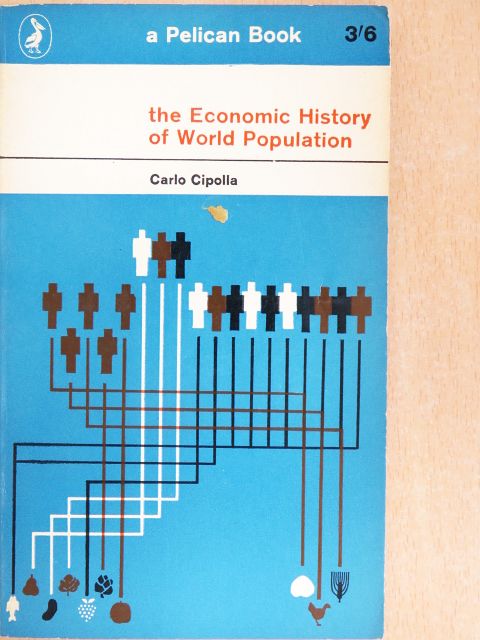
Cím: The economic history of world population [antikvár]
Szerző:
Carlo M. Cipolla
Kiadó: Penguin Books
Kötés: Ragasztott papírkötés
Méret: 110 mm x 180 mm
Új vásárló vagyok!
új vásárlóval indíthatsz rendelést............