


kategória
szerző
cím
sorozat
betöltés...
kiadó
betöltés...
ISBN
évszám
ár
-
leírás
Előrendelhető
A mezők bármelyike illeszkedjen
A mezők mind illeszkedjen



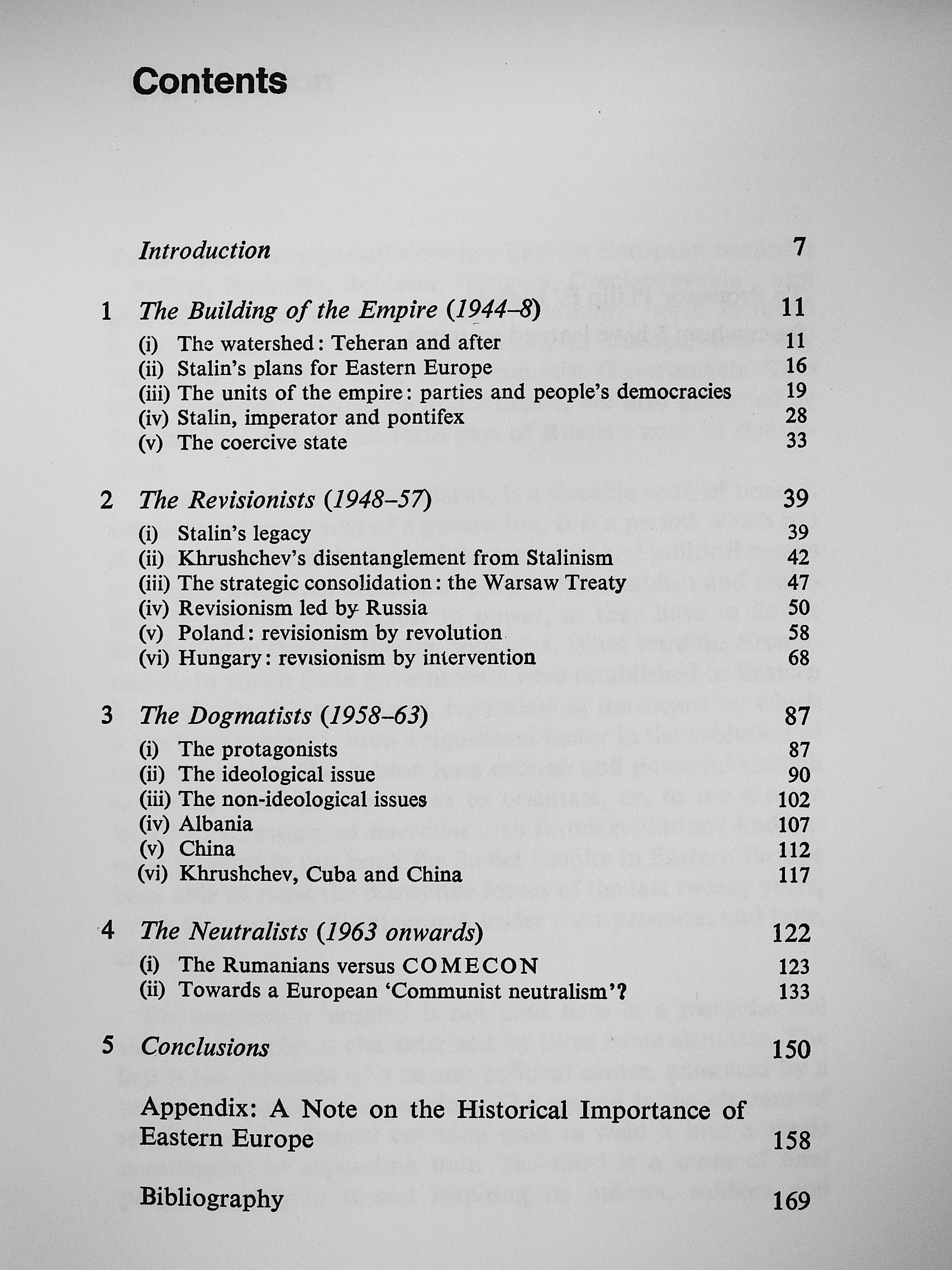
The Break-up of the Soviet Empire in Eastern Europe [antikvár]
Ghita Ionescu

Introduction
Twenty years have passed since five Eastern European countries - Poland, Rumania, Bulgaria, Hungary, Czechoslovakia - and part of another country, Eastern Germany, were included in Soviet Russia's zone of domination in Europe, and they have been ruled ever since by Communist Governments. Two other countries, Yugoslavia and Albania, are also governed by Communists, but do not form part of Russia's zone of domination.
Twenty years, by any standards, is a sizeable span of time; it amounts to the passing of a generation. It is a...
online ár:
Webáruházunkban a termékek mellett feltüntetett fekete színű online ár csak internetes megrendelés esetén érvényes.
2540 Ft

Részletesen erről a termékről
Bővebb ismertető
Introduction
Twenty years have passed since five Eastern European countries - Poland, Rumania, Bulgaria, Hungary, Czechoslovakia - and part of another country, Eastern Germany, were included in Soviet Russia's zone of domination in Europe, and they have been ruled ever since by Communist Governments. Two other countries, Yugoslavia and Albania, are also governed by Communists, but do not form part of Russia's zone of domination.
Twenty years, by any standards, is a sizeable span of time; it amounts to the passing of a generation. It is a period which has shown us that with the help of the technical and political means at present available, dictatorial parties can establish and maintain themselves comfortably in power, as they have in Soviet Russia and in the two Iberian countries. What were the circumstances in which these governments were established in Eastern Europe? Has this continuity, regardless of the means by which it has been achieved, been a significant factor in the evolution of these countries? Has it been long enough and powerful enough to mould these peoples so as to orientate, or, to use a more Marxist expression, to determine their future evolution? And has what is called in this book the Soviet Empire in Eastern Europe been able to resist the disruptive forces of the last twenty years, or on the contrary disintegrated under their pressure, and how, and why?
The expression 'empire' is not used here in a metaphorical sense. An empire is characterized by three basic elements. The first is the existence of a strong political centre, animated by a historical mission of expansion. The second is the element of religious or ideological coercion used to weld it into a single coordinated or expanding unit. The third is a sense of final purpose justifying it and inspiring its officers, soldiers and
Termékadatok
Cím: The Break-up of the Soviet Empire in Eastern Europe [antikvár]
Szerző:
Ghita Ionescu
Kiadó: Greenwood Press
Kötés: Fűzött keménykötés
Méret: 140 mm x 220 mm
Új vásárló vagyok!
új vásárlóval indíthatsz rendelést............